

When we look at the current MBA market, it’s easy to get overwhelmed by endless rankings and corporate buzzwords that all start to sound the same. To get a clearer picture of what actually happens inside the classroom, and across borders, we spoke with Benoît Heilbrunn, MBA Associate Dean at ESCP Business School.
Our goal was to understand if an MBA can still offer something more than just a salary bump (even if the €100K average salary after three years remains a strong argument). What emerged is a program built on three pillars: movement, critical doubt, and a very real human network.
The five-campus advantage: moving beyond one perspective
Most MBAs are tied to a single city. ESCP, however, operates across six European hubs: Berlin, London, Madrid, Paris, Turin, and Warsaw. According to Prof. Heilbrunn, this isn’t just about the logistics of travel, but about a fundamental shift in how one views management.
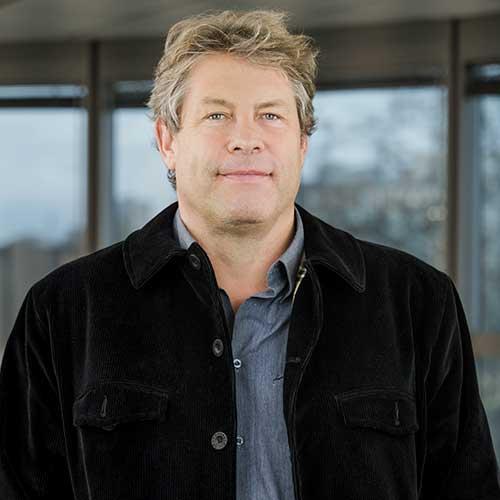
“What really sets the ESCP MBA apart in my view, is first of all its five-campus dimension,” he explains. “Studying across different campuses means being exposed to different business environments, different cultures and different managerial approaches. I think that is a real differentiator because it gives students a much broader and more international understanding of business than a more traditional single-campus MBA.”
Thinking instead of just “processing”
A common criticism of business education is that it produces “technical managers” rather than leaders. ESCP seems to have taken a different route by introducing concepts like “Art Thinking” and emphasizing philosophy alongside finance.
“The second distinctive feature is the importance given to critical thinking,” says Heilbrunn. “What I find particularly interesting about ESCP is that the programme does not seem to focus only on technical business knowledge. It also encourages students to step back, question assumptions, and think more deeply about organisations, leadership and the role of business in society.” For the Professor, this mix of academic rigour and reflection is exactly what makes the program attractive in a world that is becoming increasingly complex.
Preparation for a complex market
The curriculum doesn’t ignore the essentials (Accounting, Finance, and Data are all there) and it integrates them with the messy realities of modern business, like Green Finance and AI. The focus is on making sure students can actually do the job, not just talk about it.
“I would describe the curriculum as being designed to develop adaptable and responsible leaders, not just technically competent managers,” Heilbrunn notes. He points to the consultancy projects and the international business simulation as key moments where students clarify their professional direction. “In a business world that is increasingly uncertain and complex, that kind of creative and critical mindset will become a major career advantage.”
A network that actually answers the phone
Networking is often a buzzword, but at ESCP, it’s backed by a community of 100,000 alumni. The school’s data shows that 100% of graduates find a role within three months, largely because they are joining an established ecosystem.
Prof. Heilbrunn is very clear on this point: “Networking is not just about visibility; it is also about learning, exchanging perspectives, gaining access to opportunities, and building trust over the long term. Being part of a community of nearly 100,000 alumni is a real asset… it can open doors, provide mentoring, create business opportunities and support career development well beyond graduation.”
ESCP in numbers
- Top Tier: Ranked #4 European Business School and #1 for Finance worldwide (FT 2025).
- Speed: 10 to 22 months, depending on your goals.
- Results: 100% employment rate shortly after graduation.
If you’re curious about how ‘Art Thinking’ or the multi-campus rotation actually fits into your career plans, it’s worth taking a closer look at the details. Explore the campuses and the full course list.